
Dead Tree Removal in Salisbury, NC
Direct Salisbury, NC Solution:
Safely taking down standing dead, rotting, and brittle trees before unpredictable branch drops cause injury or property damage.
Get a Quote for Dead Tree Removal
Owner Joe will review your tree & schedule an on-site visit
Overview & Arboricultural Standards
A dead tree standing on your property is a ticking clock. As a tree dies, its vascular system shuts down, moisture evaporates from the wood, and wood-boring insects and saprophytic fungi rapidly consume the cellulose structure.
What was once flexible living timber turns into dry, brittle wood with zero tensile strength. Large upper canopy limbs can snap without any wind at all—a phenomenon known as sudden limb drop. Left standing long enough, the base of the trunk rots hollow, making eventual collapse guaranteed.
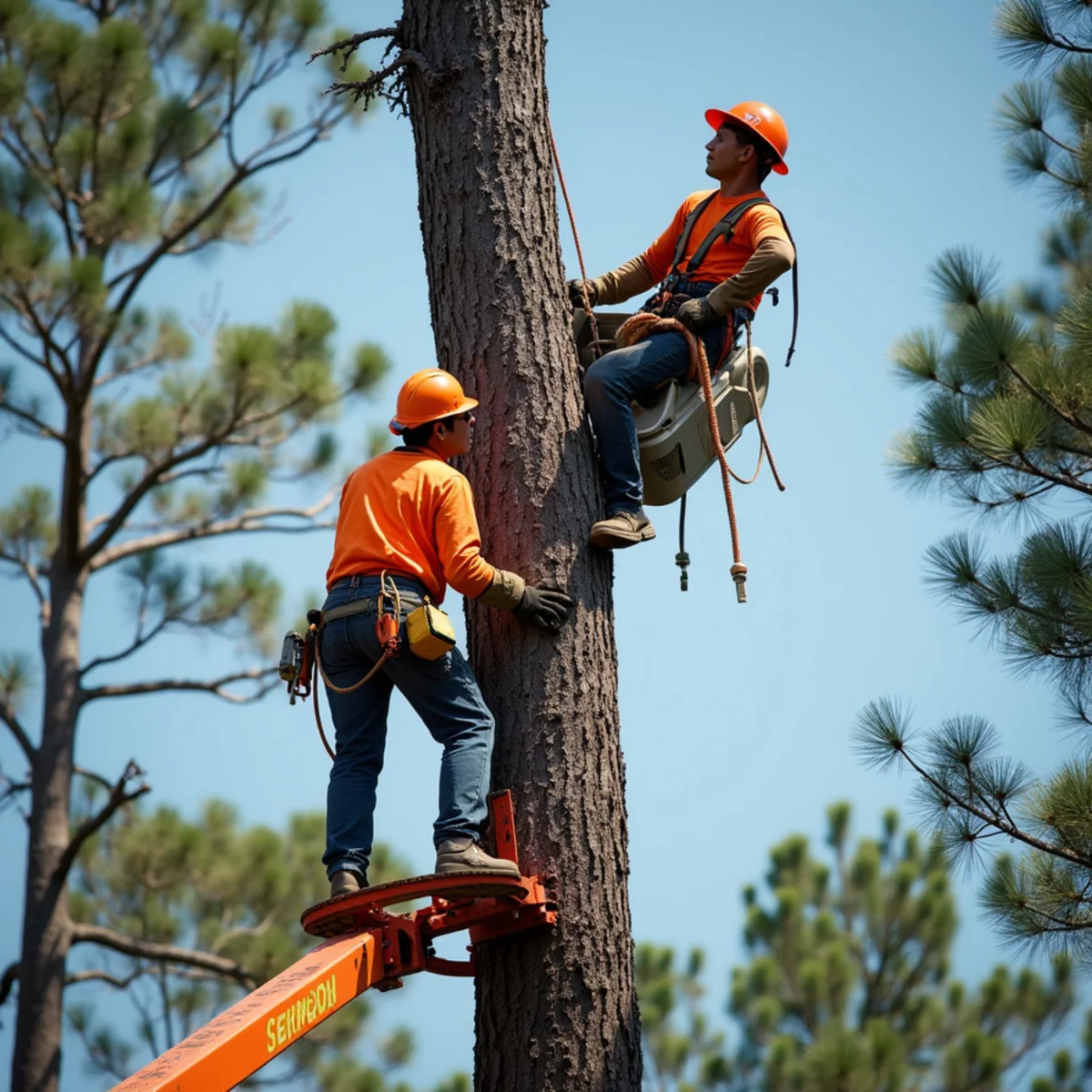
At Joe's Tree Care, we strongly advise removing dead trees before they deteriorate past the point of safe climbing or rigging. Once a tree becomes fully desiccated and rotten, our crews must deploy bucket trucks or cranes rather than standard climbing gear, increasing the project complexity.
What's Included in Our Dead Tree Removal Service
Itemized deliverables covered in your written estimate
Sounding & Structural Integrity Evaluation
Arborist mallet sounding to assess internal hollows, bark detachment, and wood fiber stability before rigging.
Non-Climbing Aerial Bucket or Crane Access
Deploying mechanized aerial lifts to dismantle dangerous dead canopies without placing climber weight on rotten timber.
Controlled Piece-by-Piece Canopy Dismantling
Sectioning dry, brittle limbs into lightweight pieces to prevent sudden limb snaps and protect lawns or roofs.
Low-Stump Ground-Level Trunk Sectioning
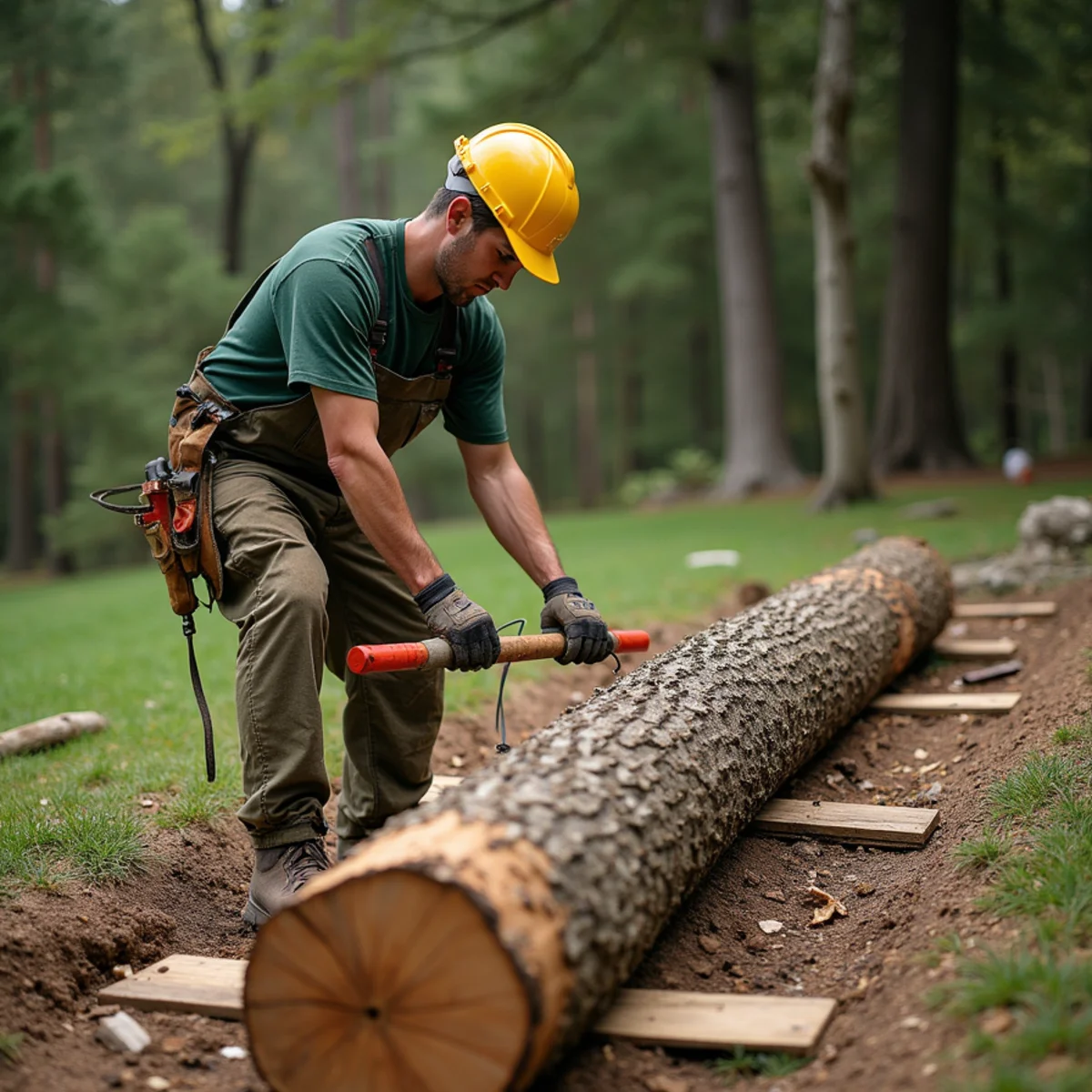
Bucking the dead trunk spar as close to grade as possible, ready for optional stump grinding.
Firewood Bucking or Complete Wood Haul-Away
Cutting clean hardwood into manageable fireplace rounds or loading and hauling all wood off-site.
Comprehensive Debris Chipping & Raking
Chipping brittle twigs, raking bark fragments, and leaving your property neat, clean, and hazard-free.
How to Spot a Dead or Dying Tree
- Total absence of foliage or leaf buds during the active spring and summer growing seasons.
- Brittle twigs that snap cleanly rather than bending when bent by hand.
- Bark sloughing off the trunk in large sheets, revealing bare, dry, brown wood underneath.
- Green scratch test failure: scraping the outer bark reveals dry brown cambium instead of moist green tissue.
- Large clusters of fungal conks or bracket mushrooms emerging directly from the lower trunk.
- Extensive woodpecker activity and beetle exit holes along the upper trunk sections.
Our Dead Tree Removal Approach
Wood Integrity & Brittleness Test
We sound the trunk with an arborist mallet to detect internal hollows and evaluate whether the wood can withstand climbing ropes or requires bucket access.
Aerial Lift / Bucket Deployment
To avoid climbing unstable dead trunks, we use our aerial bucket truck to access the upper crown safely from above.
Piece-by-Piece Canopy Dismantling
Brittle limbs are cut into small, lightweight pieces and guided down, preventing unexpected snap-offs from impacting fences or turf.
Trunk Takedown & Complete Mulch Cleanup
The remaining trunk is sectioned down to ground level, and all decaying wood fragments, sawdust, and logs are loaded and hauled away.
Site Sanitization & Fungal Spore Cleanup
We rake rotten wood punk, chip all infected debris, and clean the drop zone to reduce pathogen transmission to adjacent trees.
Dead Tree Removal Cost Considerations
We believe in complete pricing transparency. Because every tree and property has different drop zones, power lines, and trunk diameters, your written quote is based on clear, honest physical factors:
Stage of Decay
A recently dead tree that can still be climbed safely is less expensive to remove than a severely rotten tree requiring specialized crane or bucket staging.
Proximity to Targets
Dead trees in open fields can be directionally felled in minutes; dead trees over roofs require meticulous piece-by-piece lowering.
Tree Height & Branch Spread
Large mature dead pines and oaks generate substantial wood weight requiring multiple dump trailer loads.
Wood Disposal vs. Firewood Retention
Choosing to keep bucked firewood rounds on your property significantly reduces trucking fees and disposal expenses.
Why Salisbury Homeowners Choose Joe's for Dead Tree Removal
Our reputation across Rowan County is built on craftsmanship, honest on-site evaluations by owner Joe, and respect for your lawn and landscaping:
20+ Piedmont Experience
Over 15 years navigating Piedmont red clay stability, seasonal ice storms, and mature hardwood rigging.
4.8★ Google Rating (63 Reviews)
Independently verified Rowan County homeowners praising prompt arrival, fair quotes, and rake-clean lawns.
Owner Joe & Climber Tyler On-Site
No subcontracted crews or commission-hungry salesmen. You speak directly with the arborists working your trees.
Lawn Protection Mats Guarantee
We deploy composite turf-saving ground mats to safeguard delicate grass, sprinkler systems, and paver driveways.
Southern Pine Beetle, Oak Decline & Dead Timber in Salisbury
Dead trees are an unfortunately common sight across Salisbury, Rowan County, and the Piedmont due to overlapping biological pressures. Prolonged summer heat combined with dense red clay soil induces chronic moisture stress in mature trees, creating prime conditions for secondary pests like the Southern Pine Beetle, two-lined chestnut borer, and Armillaria root rot.
Once a pine or hardwood dies in North Carolina's warm, humid climate, wood decay fungi and wood-boring insects accelerate internal decomposition at an astonishing rate. A loblolly pine that was green in July can become dangerously brittle by November, losing its structural hinge wood.
Waiting to remove a dead tree until it begins dropping large limbs significantly increases removal costs because tree workers can no longer climb it safely. Joe's Tree Care utilizes 75-foot bucket trucks and specialized rigging to safely extract dead timber in Salisbury, Granite Quarry, East Spencer, and Faith before catastrophic collapse occurs.
Serving Salisbury, Rowan County & Surrounding Piedmont Towns
Joe's Tree Care provides prompt dispatch and scheduled dead tree removal across Rowan County, with rapid response times in Salisbury (HQ), Spencer, China Grove, Granite Quarry, Rockwell, and neighboring communities in Kannapolis and Concord. Whether you need planned preventative maintenance or urgent storm hazard stabilization, our locally based crews are just minutes away.
Frequently Asked Questions About Dead Tree Removal
How long can a dead tree stand before it falls?
Depending on species, size, and rainfall, a dead pine may stand for 1 to 2 years before top failure, while a dead oak might stand 3 to 5 years. However, brittle branches begin dropping within months, making immediate removal the only safe choice.
Can I use the dead tree for firewood?
Yes! If the tree is hardwood (oak, hickory, maple) and not rotted to powder, we can cut the trunk into 16-to-18-inch firewood rounds and stack them for you, saving you haul-off costs.
Why shouldn't I try to cut down a dead tree myself?
Dead trees are notoriously unpredictable. The vibration of a chainsaw can snap dead overhead limbs directly onto the operator, and rotten hinge wood can cause the tree to fall in an unintended direction.
How quickly does wood rot after a tree dies in North Carolina?
In the warm, humid climate of the Carolina Piedmont, sapwood rot begins within weeks of mortality. Loblolly pines lose structural integrity within 6 to 12 months, while dense hardwoods like white oak may hold structural integrity for 2 to 3 years before branch failure accelerates.
Can a dead tree spread diseases or pests to my other healthy trees?
Yes. Trees killed by Southern Pine Beetle, hypoxylon canker, or Armillaria root rot can harbor millions of insect larvae or fungal spores. Removing the dead tree promptly eliminates the breeding reservoir and protects nearby healthy oaks and pines.
Helpful Guides & Articles Related to This Service
Schedule Your Free Dead Tree Removal Estimate Today
Honest pricing, careful limb rigging, and a clean yard promise from Joe's Tree Care.